Dorothy Height Fought For Civil Rights Through Fashion Via Hats
Dorothy Height's Hats Were A Fashion Symbol In Her Fight For Civil Rights
- Height's elaborate church hats were a regal symbol of her unique power and influence.
- Her hats embodied the hallmarks of respectability that Black women sought in an unjust world.
- Height's fashion legacy inspired contemporary designers to use clothing to spread messages of equality and justice.

The Godmother of the Civil Rights movement, Dorothy Height, used the power of fashion in her fight for freedom. Her iconic church hats have become a symbol of the agency demonstrated by Black women committed to furthering the growth of their people.
Her elaborate headdresses were the epitome of elegance. Their crowning structure took up space long before the natural hair movement exploded and Kwame Brathwaite reminded us that Black was beautiful. The colors and shape of the hats changed, but the message behind them was consistent.
Height’s hats were a regal tool of defiance. She used their sherbet shades, floral accents, and gauzy ribbons to make a point about how she deserved to claim her seat at the table of power.
Unlike the small pins or cockades, associated with different movements, these were not meant to be subtle. She advised lawmakers and power brokers wearing these church hats as emblems of her unique power.
Black people saw the first ladies of their local churches, the matriarchs of their families, and the leaders of their communities sitting on Height’s brims. The women she represented were metaphorically in the room with her, perched atop her polished crowns.
Related: First Lady Of Fashion: Michelle Obama Announces New Book ‘The Look’
Who Was Dorothy Height?

Height spent 30 years as the president of the National Council of Negro Women. She served the organization designed to advance the lives of Black women and the communities that depend on them. She advocated for life-changing legislation alongside other Civil Rights icons.
She was born in Richmond, Virginia, and was a fixture at the White House during the administration of President Obama. Height championed causes including voter enfranchisement and access to education in her beautiful hats and strands of pearls. She bore witness to many of America’s most hopeful moments. In 1960, she presented First Lady Eleanor Roosevelt with the Mary McLeod Bethune Human Rights Award, wearing a sharp white fur hat.
President Bill Clinton presented Heights with the presidential medal of freedom in 1994. She stood at his side at the 35th anniversary of the signing of the Equal Pay Act. She wore a white hat with matching flowers to the ceremony. The signature accessory stood out atop her cobalt blue brocade dress.
Height received a congressional gold medal for her decades of service to the nation. The vote to honor her work was met with unanimous approval from the 108th United States Congress. She sat in the rotunda next to President George W. Bush with pale blue feathers sprouting from her hat.
She died in 2010.
How Did She Reflect The Era?
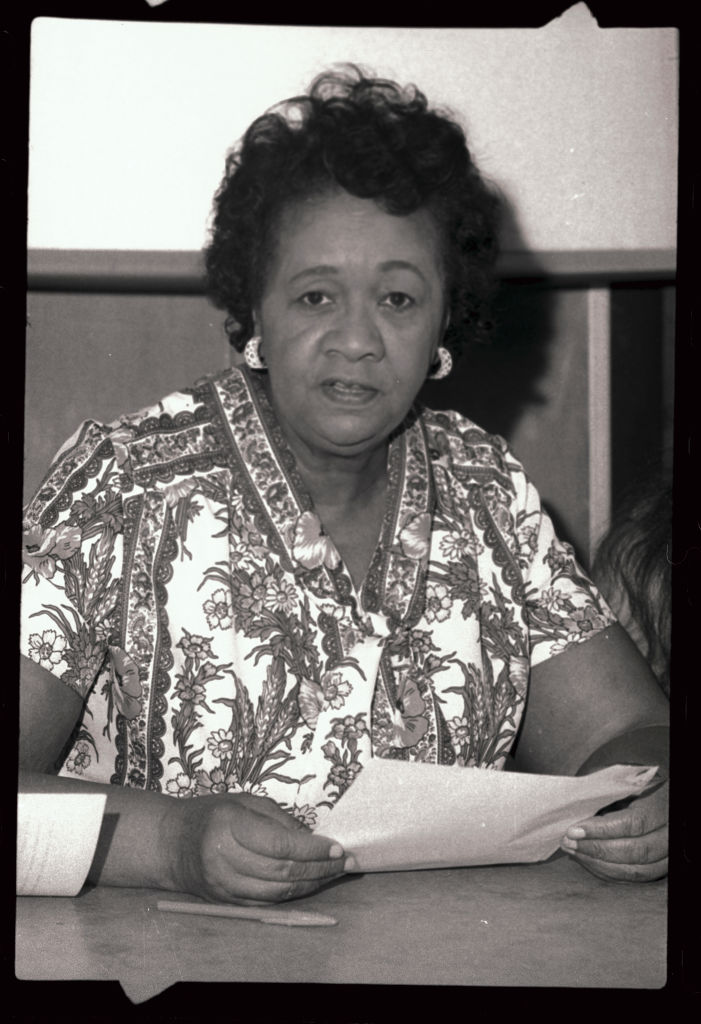
Black women asserted their femininity and elegance using accessories like hats in many spaces. From teeny pillboxes pinned to their updos to wide brimmed cavillers shading them, they were everywhere. At one point, it was uncommon to rush down a busy street in a major city without seeing fashionable hats floating on the heads of stylish Black women.
There’s just something about a sister in a church hat. It is clear she is not to be messed with. If you are thinking about cussing, fussing, or God forbid speaking to her with a piece of juicy fruit flapping between your gums, you best think again.
These hats mean business. They are still a mainstay in congregations and function halls across the nation.
Michael Cunningham released a book honoring their significance. Crowns: Portraits of Black Women in Church Hats, was published in 2000. It told the story of Height’s fellow “Hat Queens.”
The Smithsonian hosted the exhibition Crowns: Portraits of Black Women in Church Hats from December 12, 2003 to April 25, 2004. In 2019, the Dayton Art Institute displayed 43 hats from Height’s personal collection to the world.
Their presence stood in contrast to ignorant ideas about Black womenhood. They embodied the hallmarks of the respectability many were seeking in an unjust world that prejudged them.
Ironically, the pillbox hat, an accessory that carries its own political message, has been returning to the spotlight recently.
Fashion As A Tool For Liberation And legacy

Church hats are not the only method for sending a message through style. Contemporary fashion stands on the shoulders of Civil Rights warriors who used their clothing to seed ideas in the mind of the mainstream public.
Designers and consumers have spread their beliefs in their clothing on a smaller scale. Brandon Blackwood demanded equality with his “End Systemic Racism” tote. Van Putten advocated for the protection of his people with a line of merchandise that allowed everyone to show where they stood.
They could not have been empowered to do so without the efforts of Height and her peers.
Height left an enduring visual legacy. A commemorative stamp, featuring Height in one of her signature hats, was issued by the United States Postal Service in 2017.
Long live the spirit of Dorothy Height and the many Black women who tried to lift us up by their hat pins and suit lapels.
Dorothy Height's Hats Were A Fashion Symbol In Her Fight For Civil Rights was originally published on hellobeautiful.com